
Media Player Karaoke
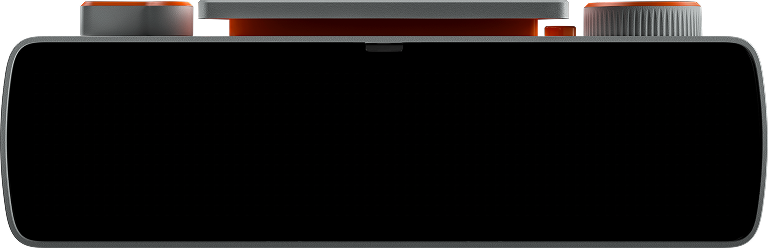
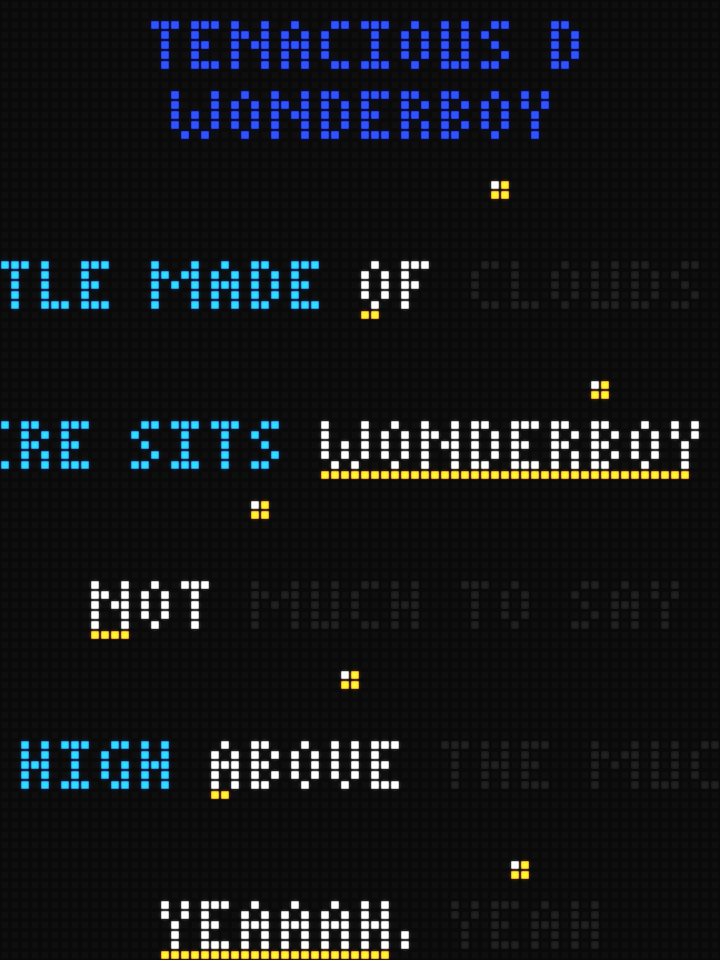
Shows synced song lyrics on BUSY Bar with karaoke highlighting, playback controls, scrolling metadata, and optional two-line lyric mode.
How to run
This app depends on websockets. Grab the app folder
from GitHub, install once, then run:
pip install -r requirements.txt
python app.py
Over USB the bar is always at 10.0.4.20. On Wi-Fi, pass the bar's IP
with --host <address>.
No bar at hand? Run the
BUSY Bar Emulator
and point the app at it: python app.py --host 127.0.0.1:8080.
To keep it running without a terminal open, install it with busybar-manager, which handles the virtualenv, autostart and scheduling, and lets you switch between apps from a web dashboard.
Source code
app.py
#!/usr/bin/env python3
"""media-player-karaoke: synchronized lyrics for BUSY Bar (macOS + Windows).
Reads system Now Playing via MediaRemote/JXA on macOS or Windows Media Control/WinRT on Windows, looks up synced lyrics on LRCLIB,
and renders a 72x16 karaoke line with a bouncing ball over the current word.
Examples:
python3 media_player_karaoke_v13.py
python3 media_player_karaoke_v13.py --host 127.0.0.1:8080
python3 media_player_karaoke_v13.py --demo
python3 media_player_karaoke_v13.py --debug
The bouncing-ball word timing is estimated inside each LRC line because normal
LRC files provide line timestamps, not word timestamps. The line boundaries
remain synchronized to the player; only the intra-line word timing is inferred.
"""
from __future__ import annotations
import argparse
import asyncio
import hashlib
import json
import math
import os
from pathlib import Path
import queue
import re
import struct
import subprocess
import sys
import threading
import time
import unicodedata
import urllib.error
import urllib.parse
import urllib.request
import zlib
APP = "media-player-karaoke"
W, H = 72, 16
DEFAULT_HOST = "10.0.4.20"
DEFAULT_FPS = 15
LRCLIB_GET = "https://lrclib.net/api/get"
LRCLIB_SEARCH = "https://lrclib.net/api/search"
USER_AGENT = "busybar-media-player-karaoke/0.8 (https://github.com/busybar)"
BLACK = (0, 0, 0)
WHITE = (240, 240, 240)
DIM = (76, 76, 76)
YELLOW = (255, 220, 35)
CYAN = (40, 210, 255)
BLUE = (35, 120, 255)
RED = (255, 70, 70)
GREEN = (60, 220, 100)
# Compact 3x5-ish font. Rows are bit masks, MSB at the left.
FONT = {
" ": (2, [0,0,0,0,0]), "!": (1,[1,1,1,0,1]), "'": (1,[1,1,0,0,0]),
"(": (2,[1,2,2,2,1]), ")": (2,[2,1,1,1,2]), ",": (1,[0,0,0,1,1]),
"-": (3,[0,0,7,0,0]), ".": (1,[0,0,0,0,1]), "/": (3,[1,1,2,4,4]),
":": (1,[0,1,0,1,0]), "?": (3,[6,1,2,0,2]),
"0": (3,[7,5,5,5,7]), "1": (3,[2,6,2,2,7]), "2": (3,[6,1,7,4,7]),
"3": (3,[6,1,3,1,6]), "4": (3,[5,5,7,1,1]), "5": (3,[7,4,6,1,6]),
"6": (3,[3,4,7,5,7]), "7": (3,[7,1,2,2,2]), "8": (3,[7,5,7,5,7]),
"9": (3,[7,5,7,1,6]),
"A": (3,[2,5,7,5,5]), "B": (3,[6,5,6,5,6]), "C": (3,[3,4,4,4,3]),
"D": (3,[6,5,5,5,6]), "E": (3,[7,4,6,4,7]), "F": (3,[7,4,6,4,4]),
"G": (3,[3,4,5,5,3]), "H": (3,[5,5,7,5,5]), "I": (3,[7,2,2,2,7]),
"J": (3,[1,1,1,5,2]), "K": (3,[5,5,6,5,5]), "L": (3,[4,4,4,4,7]),
"M": (5,[17,27,21,17,17]), "N": (4,[9,13,11,9,9]), "O": (3,[2,5,5,5,2]),
"P": (3,[6,5,6,4,4]), "Q": (4,[6,9,9,11,7]), "R": (3,[6,5,6,5,5]),
"S": (3,[3,4,2,1,6]), "T": (3,[7,2,2,2,2]), "U": (3,[5,5,5,5,7]),
"V": (3,[5,5,5,5,2]), "W": (5,[17,17,21,21,10]), "X": (3,[5,5,2,5,5]),
"Y": (3,[5,5,2,2,2]), "Z": (3,[7,1,2,4,7]),
}
MAC_JXA = r'''
ObjC.import('Foundation');
function js(v) {
try { if (v === null || v === undefined) return null; return v.js; }
catch (_) { return null; }
}
function numberValue(v) {
let x = js(v);
if (x === null || x === undefined) return null;
let n = Number(x);
return Number.isFinite(n) ? n : null;
}
function run() {
const MediaRemote = $.NSBundle.bundleWithPath('/System/Library/PrivateFrameworks/MediaRemote.framework/');
MediaRemote.load;
const MRNowPlayingRequest = $.NSClassFromString('MRNowPlayingRequest');
if (!MRNowPlayingRequest) return JSON.stringify({});
const item = MRNowPlayingRequest.localNowPlayingItem;
if (!item) return JSON.stringify({});
const info = item.nowPlayingInfo;
if (!info) return JSON.stringify({});
function get(k) { try { return info.valueForKey(k); } catch (_) { return null; } }
const title = js(get('kMRMediaRemoteNowPlayingInfoTitle'));
const artist = js(get('kMRMediaRemoteNowPlayingInfoArtist'));
const album = js(get('kMRMediaRemoteNowPlayingInfoAlbum'));
const duration = numberValue(get('kMRMediaRemoteNowPlayingInfoDuration'));
const rate = numberValue(get('kMRMediaRemoteNowPlayingInfoPlaybackRate'));
let calculatedElapsed = null;
try {
if (item.metadata) calculatedElapsed = numberValue(item.metadata.calculatedPlaybackPosition);
} catch (_) {}
const rawElapsed = numberValue(get('kMRMediaRemoteNowPlayingInfoElapsedTime'));
const useCalculatedElapsed = rate !== null && rate > 0 && calculatedElapsed !== null;
const elapsed = useCalculatedElapsed ? calculatedElapsed : rawElapsed;
let app = null;
try { app = js(MRNowPlayingRequest.localNowPlayingPlayerPath.client.displayName); } catch (_) {}
return JSON.stringify({title, artist, album, duration, elapsed, rate, app});
}
'''
# Windows system-wide Now Playing backend. Mirrors the official BUSY Bar
# media-player implementation and uses built-in Windows Runtime APIs.
WINDOWS_PS = r'''$ErrorActionPreference = 'Stop'
function Wait-WinRT($op) {
while ($op.Status -eq 0) { Start-Sleep -Milliseconds 10 }
if ($op.Status -eq 1) { return $op.GetResults() }
throw "WinRT async operation failed with status $($op.Status)"
}
[void][Windows.Media.Control.GlobalSystemMediaTransportControlsSessionManager, Windows.Media.Control, ContentType=WindowsRuntime]
$mgr = Wait-WinRT ([Windows.Media.Control.GlobalSystemMediaTransportControlsSessionManager]::RequestAsync())
$session = $mgr.GetCurrentSession()
if ($null -eq $session) {
@{ ok=$true; active=$false; state='idle' } | ConvertTo-Json -Compress
exit 0
}
$props = Wait-WinRT ($session.TryGetMediaPropertiesAsync())
$playback = $session.GetPlaybackInfo()
$timeline = $session.GetTimelineProperties()
$state = switch ([int]$playback.PlaybackStatus) {
4 { 'playing' }
5 { 'paused' }
3 { 'paused' }
default { 'unknown' }
}
$duration = $null
$elapsed = $null
if ($null -ne $timeline) {
try { $duration = $timeline.EndTime.TotalSeconds } catch {}
try { $elapsed = $timeline.Position.TotalSeconds } catch {}
}
@{
ok = $true
active = $true
state = $state
app = $session.SourceAppUserModelId
title = if ($props.Title) { [string]$props.Title } else { $null }
artist = if ($props.Artist) { [string]$props.Artist } else { $null }
album = if ($props.AlbumTitle) { [string]$props.AlbumTitle } else { $null }
duration = $duration
elapsed = $elapsed
rate = if ($state -eq 'playing') { 1.0 } else { 0.0 }
} | ConvertTo-Json -Compress
'''
WINDOWS_CONTROL_PS = r'''param([string]$Command)
$ErrorActionPreference = 'Stop'
function Wait-WinRT($op) {
while ($op.Status -eq 0) { Start-Sleep -Milliseconds 10 }
if ($op.Status -eq 1) { return $op.GetResults() }
throw "WinRT async operation failed with status $($op.Status)"
}
[void][Windows.Media.Control.GlobalSystemMediaTransportControlsSessionManager, Windows.Media.Control, ContentType=WindowsRuntime]
$mgr = Wait-WinRT ([Windows.Media.Control.GlobalSystemMediaTransportControlsSessionManager]::RequestAsync())
$session = $mgr.GetCurrentSession()
if ($null -eq $session) { throw 'No active media session' }
switch ($Command) {
'toggle' { [void](Wait-WinRT ($session.TryTogglePlayPauseAsync())) }
'next' { [void](Wait-WinRT ($session.TrySkipNextAsync())) }
'previous' { [void](Wait-WinRT ($session.TrySkipPreviousAsync())) }
default { throw "Unknown command: $Command" }
}
'''
# OS-global media controls, mirrored from the official BUSY Bar media-player.
MAC_CONTROL_JXA = r'''ObjC.import('Foundation');
function run(argv) {
const command = Number(argv[0]);
const bundle = $.NSBundle.bundleWithPath('/System/Library/PrivateFrameworks/MediaRemote.framework/');
if (!bundle || !bundle.load) return 'Could not load MediaRemote.framework';
const Controller = $.NSClassFromString('MRNowPlayingController');
if (!Controller) return 'MRNowPlayingController class not found';
const controller = Controller.localRouteController;
if (!controller) return 'localRouteController unavailable';
const options = $.NSDictionary.alloc.init;
controller.sendCommandOptionsCompletion(command, options, null);
delay(0.35);
return 'ok';
}
'''
def media_command(command: str):
if sys.platform == "darwin":
ids = {"toggle": 2, "next": 4, "previous": 5}
cmd_id = ids.get(command)
if cmd_id is None:
return False, f"unsupported command: {command}"
try:
proc = subprocess.run(
["osascript", "-l", "JavaScript", "-e", MAC_CONTROL_JXA, str(cmd_id)],
capture_output=True, text=True, timeout=5,
)
except Exception as exc:
return False, str(exc)
detail = (proc.stderr or proc.stdout).strip()
return proc.returncode == 0 and (not detail or detail == "ok"), detail or "ok"
if sys.platform == "win32":
try:
proc = subprocess.run(
["powershell.exe", "-NoProfile", "-NonInteractive",
"-ExecutionPolicy", "Bypass", "-Command", WINDOWS_CONTROL_PS,
"-Command", command],
capture_output=True, text=True, timeout=8,
)
except Exception as exc:
return False, str(exc)
detail = (proc.stderr or proc.stdout).strip()
return proc.returncode == 0, detail or "ok"
return False, f"media controls unsupported on {sys.platform}"
# Minimal BUSY Bar input WebSocket client. Firmware status frames are protobuf.
def _read_varint(buf: bytes, pos: int):
value = 0
shift = 0
while pos < len(buf):
b = buf[pos]
pos += 1
value |= (b & 0x7F) << shift
if not (b & 0x80):
return value, pos
shift += 7
if shift > 63:
raise ValueError("protobuf varint too long")
raise ValueError("truncated protobuf varint")
def _iter_proto_fields(buf: bytes):
pos = 0
while pos < len(buf):
key, pos = _read_varint(buf, pos)
field_no, wire = key >> 3, key & 7
if wire == 0:
value, pos = _read_varint(buf, pos)
yield field_no, wire, value
elif wire == 1:
if pos + 8 > len(buf):
return
yield field_no, wire, buf[pos:pos + 8]
pos += 8
elif wire == 2:
n, pos = _read_varint(buf, pos)
end = pos + n
if end > len(buf):
return
yield field_no, wire, buf[pos:end]
pos = end
elif wire == 5:
if pos + 4 > len(buf):
return
yield field_no, wire, buf[pos:pos + 4]
pos += 4
else:
raise ValueError(f"unsupported protobuf wire type {wire}")
def _zigzag32(v: int) -> int:
return (v >> 1) ^ -(v & 1)
def _decode_input_event(buf: bytes):
for field_no, wire, value in _iter_proto_fields(buf):
if wire != 2:
continue
if field_no == 1:
button = 0
action = 0
for f, w, v in _iter_proto_fields(value):
if w == 0 and f == 1:
button = int(v)
elif w == 0 and f == 2:
action = int(v)
return {"button_event": {"button": button, "action": action}}
if field_no == 3:
raw_delta = 0
for f, w, v in _iter_proto_fields(value):
if w == 0 and f == 1:
raw_delta = int(v)
return {"encoder_event": {"delta": _zigzag32(raw_delta)}}
return None
def _decode_state_inputs(frame: bytes):
events = []
for field_no, wire, update in _iter_proto_fields(frame):
if field_no != 2 or wire != 2:
continue
for uf, uw, uv in _iter_proto_fields(update):
if uf == 11 and uw == 2:
event = _decode_input_event(uv)
if event:
events.append(event)
return events
def _ws_url(host: str, token=None) -> str:
raw = host.rstrip("/")
if "://" not in raw:
raw = "http://" + raw
parsed = urllib.parse.urlparse(raw)
scheme = "wss" if parsed.scheme == "https" else "ws"
path = parsed.path.rstrip("/") + "/api/status/ws"
query = parsed.query
if token:
token_q = urllib.parse.urlencode({"x-api-token": token})
query = token_q if not query else query + "&" + token_q
return urllib.parse.urlunparse((scheme, parsed.netloc, path, "", query, ""))
class InputListener:
def __init__(self, address: str, token=None):
self._address = address
self._token = token
self._queue = queue.Queue()
self._stop = threading.Event()
self._thread = None
self.available = True
self.error = None
def start(self):
try:
import websockets # noqa: F401
except ImportError as exc:
self.available = False
self.error = f"websockets not installed: {exc}"
return
self._thread = threading.Thread(target=self._run, daemon=True)
self._thread.start()
def stop(self):
self._stop.set()
def poll(self):
events = []
try:
while True:
events.append(self._queue.get_nowait())
except queue.Empty:
return events
def _run(self):
try:
asyncio.run(self._listen_forever())
except Exception as exc:
self.available = False
self.error = str(exc)
print(f"controls: listener stopped: {exc}")
async def _listen_forever(self):
import websockets
url = _ws_url(self._address, self._token)
backoff = 0.5
max_backoff = 3.0
connected_once = False
while not self._stop.is_set():
try:
async with websockets.connect(
url,
max_size=4 * 1024 * 1024,
ping_interval=20,
ping_timeout=20,
close_timeout=3,
open_timeout=8,
) as ws:
await ws.send(json.dumps({"enable": True}))
if connected_once:
print("controls: BUSY Bar input reconnected")
connected_once = True
self.available = True
self.error = None
backoff = 0.5
async for message in ws:
if self._stop.is_set():
return
if isinstance(message, str):
continue
try:
for event in _decode_state_inputs(bytes(message)):
self._queue.put(event)
except Exception as exc:
print(f"controls: ignored malformed status frame: {exc}")
except asyncio.CancelledError:
raise
except Exception as exc:
if self._stop.is_set():
return
self.available = False
self.error = str(exc)
print(f"controls: BUSY Bar input disconnected: {exc}; reconnecting in {backoff:g}s")
deadline = time.monotonic() + backoff
while not self._stop.is_set() and time.monotonic() < deadline:
await asyncio.sleep(min(0.25, deadline - time.monotonic()))
backoff = min(max_backoff, backoff * 2.0)
def process_control_events(listener, last_wheel_at: float, cooldown: float, invert_dial: bool = False):
for event in listener.poll():
now = time.monotonic()
if "button_event" in event:
be = event["button_event"]
if be.get("button") == 2 and be.get("action") == 0:
ok, detail = media_command("toggle")
print("control: PLAY/PAUSE" + ("" if ok else f" failed: {detail}"))
elif "encoder_event" in event:
delta = int(event["encoder_event"].get("delta", 0) or 0)
if delta and now - last_wheel_at >= cooldown:
forward = delta < 0
if invert_dial:
forward = not forward
command = "next" if forward else "previous"
ok, detail = media_command(command)
label = "NEXT" if forward else "PREVIOUS"
print(f"control: {label}" + ("" if ok else f" failed: {detail}"))
last_wheel_at = now
return last_wheel_at
def parse_args():
p = argparse.ArgumentParser(description="Synchronized karaoke lyrics for BUSY Bar")
p.add_argument("--host", default=DEFAULT_HOST)
p.add_argument("--fps", type=int, default=DEFAULT_FPS, help="render FPS (default: 15)")
p.add_argument("--poll", type=float, default=0.35, help="Now Playing poll interval")
p.add_argument("--sync-offset", type=float, default=0.0,
help="lyrics timing offset in seconds; positive = lyrics/ball earlier (default: 0)")
p.add_argument("--ball-lead", type=float, default=0.10,
help="extra ball lead in seconds relative to the lyric highlight (default: 0.10)")
p.add_argument("--no-latency-comp", action="store_true",
help="disable automatic compensation for BUSY Bar upload/draw latency")
p.add_argument("--cache-dir", default=str(Path.home() / ".cache" / "busybar-media-player-karaoke"))
p.add_argument("--debug", action="store_true")
p.add_argument("--demo", action="store_true", help="synthetic lyrics/player; no OS Now Playing needed")
p.add_argument("--no-ball", action="store_true", help="hide bouncing ball")
p.add_argument("--two-line", action="store_true",
help="show current lyric plus the next line; disables the bouncing ball")
p.add_argument("--no-underline", action="store_true",
help="hide the progress underline below the current lyric word")
p.add_argument("--token", default=None, help="BUSY Bar Wi-Fi API token/PIN, if required")
p.add_argument("--no-controls", action="store_true", help="disable BUSY Bar START/wheel media controls")
p.add_argument("--wheel-cooldown", type=float, default=0.40,
help="seconds between wheel track changes (default: 0.40)")
p.add_argument("--invert-dial", action="store_true",
help="invert rotary encoder direction for Previous/Next")
return p.parse_args()
def _base(host):
s = host.rstrip("/")
return s if s.startswith(("http://", "https://")) else "http://" + s
def _png(pixels):
raw = bytearray()
for y in range(H):
raw.append(0)
for r, g, b in pixels[y * W:(y + 1) * W]:
raw += bytes((r, g, b, 255))
def chunk(tag, data):
c = tag + data
return struct.pack(">I", len(data)) + c + struct.pack(">I", zlib.crc32(c) & 0xffffffff)
return (b"\x89PNG\r\n\x1a\n" +
chunk(b"IHDR", struct.pack(">IIBBBBB", W, H, 8, 6, 0, 0, 0)) +
chunk(b"IDAT", zlib.compress(bytes(raw), 6)) + chunk(b"IEND", b""))
class BusyDisplay:
def __init__(self, host):
self.base = _base(host)
self.frame = 0
def _request(self, method, path, data=None, content_type=None):
headers = {"Content-Type": content_type} if content_type else {}
req = urllib.request.Request(self.base + path, data=data, method=method, headers=headers)
with urllib.request.urlopen(req, timeout=5) as r:
return r.getcode()
def show(self, pixels):
name = f"karaoke{self.frame % 5}.png"
self.frame += 1
q = urllib.parse.urlencode({"application_name": APP, "file": name})
try:
self._request("POST", "/api/assets/upload?" + q, _png(pixels), "application/octet-stream")
body = json.dumps({"application_name": APP, "elements": [
{"id": "frame", "type": "image", "path": name, "x": 0, "y": 0}
]}).encode()
return self._request("POST", "/api/display/draw", body, "application/json")
except urllib.error.HTTPError as e:
if e.code in (409, 508):
return e.code
raise
def clear(self):
q = urllib.parse.urlencode({"application_name": APP})
try:
self._request("DELETE", "/api/display/draw?" + q)
except Exception:
pass
class SystemNowPlaying:
"""Read system Now Playing and maintain a smooth local playback clock.
On some macOS/player combinations MediaRemote's elapsed position only
changes when a transport event occurs (play/pause/seek). Using that value
directly makes karaoke animation appear frozen. We therefore treat it as
an anchor: while playbackRate > 0, elapsed advances from time.monotonic().
A genuinely changed MediaRemote position re-anchors the clock, preserving
seek and pause/resume accuracy.
"""
SOURCE_CHANGE_EPS = 0.05
SEEK_EPS = 0.80
# Small source-vs-local clock errors are normal. Applying them wholesale
# every poll creates visible jitter, so use a gentle phase-locked correction.
DRIFT_GAIN = 0.22
MAX_DRIFT_CORRECTION = 0.075
def __init__(self, debug=False):
self.debug = debug
self.last = {}
self._track = None
self._anchor_elapsed = 0.0
self._anchor_mono = time.monotonic()
self._last_source_elapsed = None
self._last_rate = 0.0
@staticmethod
def _identity(data):
return (data.get("app"), data.get("artist"), data.get("title"), data.get("album"))
def _clocked(self, data):
now = time.monotonic()
ident = self._identity(data)
source = data.get("elapsed")
try:
source = float(source) if source is not None else None
except (TypeError, ValueError):
source = None
try:
rate = float(data.get("rate") or 0.0)
except (TypeError, ValueError):
rate = 0.0
changed_track = ident != self._track
source_changed = (source is not None and
(self._last_source_elapsed is None or
abs(source - self._last_source_elapsed) > self.SOURCE_CHANGE_EPS))
# What our local clock says before considering the newest MediaRemote sample.
predicted = self._anchor_elapsed
if self._last_rate > 0:
predicted += (now - self._anchor_mono) * self._last_rate
if changed_track:
self._track = ident
self._anchor_elapsed = max(0.0, source or 0.0)
self._anchor_mono = now
elif rate <= 0:
# Freeze immediately on pause. Prefer a newly supplied source value,
# otherwise freeze at the locally predicted position.
frozen = source if source_changed else predicted
self._anchor_elapsed = max(0.0, frozen or 0.0)
self._anchor_mono = now
elif self._last_rate <= 0 < rate:
# Resume: MediaRemote usually sends a fresh elapsed anchor.
self._anchor_elapsed = max(0.0, source if source is not None else predicted)
self._anchor_mono = now
elif source_changed:
# Treat MediaRemote as a reference clock, not a frame clock. Normal
# refreshes differ from our monotonic extrapolation by a few tens or
# hundreds of ms; snapping to each one makes the animation jitter.
# Small errors are therefore corrected gradually (a tiny PLL), while
# a real seek still re-anchors immediately.
error = source - predicted
if abs(error) >= self.SEEK_EPS:
if self.debug:
print(f"playback seek/re-anchor: predicted={predicted:.2f}s source={source:.2f}s error={error:+.2f}s")
corrected = source
else:
correction = max(-self.MAX_DRIFT_CORRECTION,
min(self.MAX_DRIFT_CORRECTION, error * self.DRIFT_GAIN))
corrected = predicted + correction
if self.debug and abs(error) >= 0.12:
print(f"playback drift: error={error:+.3f}s correction={correction:+.3f}s")
self._anchor_elapsed = max(0.0, corrected)
self._anchor_mono = now
self._last_source_elapsed = source
self._last_rate = rate
elapsed = self._anchor_elapsed
if rate > 0:
elapsed += (now - self._anchor_mono) * rate
duration = data.get("duration")
try:
if duration is not None:
elapsed = min(elapsed, float(duration))
except (TypeError, ValueError):
pass
out = dict(data)
out["elapsed"] = max(0.0, elapsed)
return out
def _read_macos(self):
r = subprocess.run(["osascript", "-l", "JavaScript", "-e", MAC_JXA],
capture_output=True, text=True, timeout=4)
if r.returncode != 0:
raise RuntimeError((r.stderr or r.stdout).strip() or "osascript failed")
return json.loads(r.stdout.strip() or "{}")
def _read_windows(self):
r = subprocess.run(
["powershell.exe", "-NoProfile", "-NonInteractive",
"-ExecutionPolicy", "Bypass", "-Command", WINDOWS_PS],
capture_output=True, text=True, timeout=8,
)
if r.returncode != 0:
raise RuntimeError((r.stderr or r.stdout).strip() or "PowerShell Now Playing failed")
data = json.loads(r.stdout.strip() or "{}")
return data if data.get("active", True) else {}
def read(self):
try:
if sys.platform == "darwin":
data = self._read_macos()
elif sys.platform == "win32":
data = self._read_windows()
else:
if self.debug:
print(f"now-playing: unsupported platform {sys.platform}")
return self.last
if data.get("title"):
data = self._clocked(data)
self.last = data
return data
self.last = {}
self._track = None
self._last_source_elapsed = None
self._last_rate = 0.0
return {}
except Exception as e:
if self.debug:
print("now-playing error:", e)
return self.last
def extrapolate(self, data):
"""Advance the cached elapsed value between the slower JXA polls."""
if not data:
return data
now = time.monotonic()
out = dict(data)
if self._last_rate > 0:
elapsed = self._anchor_elapsed + (now - self._anchor_mono) * self._last_rate
try:
if out.get("duration") is not None:
elapsed = min(elapsed, float(out["duration"]))
except (TypeError, ValueError):
pass
out["elapsed"] = max(0.0, elapsed)
else:
out["elapsed"] = self._anchor_elapsed
return out
_TIMESTAMP = re.compile(r"^\[(\d+):(\d+(?:\.\d+)?)\]\s?(.*)$")
def parse_lrc(text):
rows = []
for raw in (text or "").splitlines():
m = _TIMESTAMP.match(raw.strip("\r"))
if not m:
continue
t = int(m.group(1)) * 60 + float(m.group(2))
lyric = m.group(3).strip()
rows.append((t, lyric))
rows.sort(key=lambda x: x[0])
return rows
def normalize(s):
s = unicodedata.normalize("NFKD", s or "").encode("ascii", "ignore").decode()
return " ".join(s.upper().split())
def track_key(info):
material = "\x1f".join(str(info.get(k) or "") for k in ("artist", "title", "album", "duration"))
return hashlib.sha1(material.encode("utf-8", "ignore")).hexdigest()
class LyricsFetcher:
def __init__(self, cache_dir, debug=False):
self.cache = Path(cache_dir)
self.cache.mkdir(parents=True, exist_ok=True)
self.debug = debug
self.requests = queue.Queue()
self.results = queue.Queue()
self.stop = threading.Event()
self.thread = threading.Thread(target=self._run, daemon=True)
self.thread.start()
def request(self, info):
self.requests.put(dict(info))
def poll(self):
latest = None
try:
while True:
latest = self.results.get_nowait()
except queue.Empty:
return latest
def close(self):
self.stop.set()
def _http_json(self, url):
req = urllib.request.Request(url, headers={"User-Agent": USER_AGENT, "Accept": "application/json"})
with urllib.request.urlopen(req, timeout=15) as r:
return json.loads(r.read().decode("utf-8", "replace"))
def _lookup(self, info):
key = track_key(info)
path = self.cache / (key + ".json")
if path.exists():
try:
obj = json.loads(path.read_text("utf-8"))
return key, obj
except Exception:
pass
title, artist = info.get("title") or "", info.get("artist") or ""
album = info.get("album") or ""
duration = info.get("duration")
candidates = []
if title and artist and album and duration:
params = urllib.parse.urlencode({"track_name": title, "artist_name": artist,
"album_name": album, "duration": round(float(duration), 2)})
try:
candidates = [self._http_json(LRCLIB_GET + "?" + params)]
except urllib.error.HTTPError as e:
if e.code != 404:
raise
if not candidates and title:
params = urllib.parse.urlencode({"track_name": title, "artist_name": artist})
try:
candidates = self._http_json(LRCLIB_SEARCH + "?" + params) or []
except Exception:
candidates = []
# Prefer synced lyrics and closest duration.
synced = [c for c in candidates if isinstance(c, dict) and c.get("syncedLyrics")]
if synced:
if duration:
synced.sort(key=lambda c: abs(float(c.get("duration") or 1e9) - float(duration)))
obj = {"status": "ok", "source": "lrclib", "record": synced[0]}
else:
obj = {"status": "not_found", "source": "lrclib"}
try:
path.write_text(json.dumps(obj, ensure_ascii=False, indent=2), "utf-8")
except Exception:
pass
return key, obj
def _run(self):
while not self.stop.is_set():
try:
info = self.requests.get(timeout=0.2)
except queue.Empty:
continue
# Collapse queued changes to the newest track.
try:
while True:
info = self.requests.get_nowait()
except queue.Empty:
pass
try:
key, obj = self._lookup(info)
self.results.put((key, obj))
if self.debug:
print("lyrics:", info.get("artist"), "-", info.get("title"), obj.get("status"))
except Exception as e:
if self.debug: print("lyrics error:", e)
self.results.put((track_key(info), {"status": "error", "error": str(e)}))
def blank():
return [BLACK] * (W * H)
def px(buf, x, y, color):
if 0 <= x < W and 0 <= y < H:
buf[y * W + x] = color
def rect(buf, x, y, w, h, color):
for yy in range(y, y + h):
for xx in range(x, x + w):
px(buf, xx, yy, color)
def glyph(ch):
ch = normalize(ch)[:1]
return FONT.get(ch, FONT.get("?"))
def text_width(text):
total = 0
for ch in normalize(text):
w, _ = FONT.get(ch, FONT["?"])
total += w + 1
return max(0, total - 1)
def draw_text(buf, text, x, y, color, clip_left=0, clip_right=W):
pen = x
for ch in normalize(text):
w, rows = FONT.get(ch, FONT["?"])
for yy, mask in enumerate(rows):
for xx in range(w):
if mask & (1 << (w - 1 - xx)):
sx = pen + xx
if clip_left <= sx < clip_right:
px(buf, sx, y + yy, color)
pen += w + 1
return pen
def word_layout(line):
words = re.findall(r"\S+", normalize(line))
positions = []
x = 0
for word in words:
w = text_width(word)
positions.append((word, x, w))
x += w + 4 # visible gap between words
return words, positions, max(0, x - 4)
def estimated_word_times(line, start, end):
words, positions, width = word_layout(line)
if not words:
return [], positions, width
duration = max(0.25, end - start)
# Weight by letters but add a fixed minimum so short words still get a beat.
weights = [max(2.2, len(re.sub(r"[^A-Z0-9]", "", w)) + 0.8) for w in words]
total = sum(weights)
cursor = start
times = []
for weight in weights:
span = duration * weight / total
times.append((cursor, cursor + span))
cursor += span
times[-1] = (times[-1][0], end)
return times, positions, width
def current_line(rows, elapsed, total_duration=None):
if not rows:
return None
idx = -1
for i, (t, _) in enumerate(rows):
if t <= elapsed:
idx = i
else:
break
if idx < 0:
return {"index": -1, "start": 0.0, "end": rows[0][0], "text": ""}
start, text = rows[idx]
if idx + 1 < len(rows):
end = rows[idx + 1][0]
elif total_duration and total_duration > start:
end = float(total_duration)
else:
end = start + max(3.0, len(text) * 0.16)
# Pathological timestamp gaps make the ball crawl. Keep display motion sane,
# while line selection itself still uses the real LRC timestamps.
visual_end = min(end, start + max(2.0, min(12.0, len(text) * 0.22)))
return {"index": idx, "start": start, "end": end, "visual_end": visual_end, "text": text}
def render_karaoke(rows, info, ball=True, underline=True, sync_offset=0.0, ball_lead=0.10, latency_comp=0.0):
buf = blank()
# Render slightly into the future to compensate for transport/display
# latency. --sync-offset is the user calibration; latency_comp is measured
# automatically from recent upload+draw calls.
elapsed = max(0.0, float(info.get("elapsed") or 0.0) + sync_offset + latency_comp)
duration = info.get("duration")
cur = current_line(rows, elapsed, duration)
if not cur or cur["index"] < 0 or not cur["text"]:
return render_standby(info, "found")
times, positions, full_w = estimated_word_times(cur["text"], cur["start"], cur["visual_end"])
if not positions:
return buf
# Find active word. After visual_end, pin to last word until next real LRC line.
wi = len(times) - 1
for i, (a, b) in enumerate(times):
if elapsed < b:
wi = i
break
a, b = times[wi]
p = 1.0 if b <= a else max(0.0, min(1.0, (elapsed - a) / (b - a)))
# The visual ball benefits from a small independent lead: LRC timestamps
# mark line starts, while our word timestamps are inferred. Advancing only
# the ball makes it land closer to the perceived vocal attack without
# prematurely changing the highlighted word.
ball_elapsed = elapsed + ball_lead
ball_wi = wi
for i, (ba, bb) in enumerate(times):
if ball_elapsed < bb:
ball_wi = i
break
ba, bb = times[ball_wi]
bp = 1.0 if bb <= ba else max(0.0, min(1.0, (ball_elapsed - ba) / (bb - ba)))
_, wx, ww = positions[wi]
_, bwx, bww = positions[ball_wi]
if ball_wi + 1 < len(positions):
_, nx, nw = positions[ball_wi + 1]
ball_world_x = (bwx + bww/2) + ((nx + nw/2) - (bwx + bww/2)) * bp
else:
ball_world_x = bwx + bww * (0.25 + 0.5 * bp)
# Keep active word/ball around the center; don't scroll short lines.
if full_w <= W - 4:
camera = -(W - full_w)//2
else:
target = ball_world_x - W * 0.47
camera = max(0.0, min(float(full_w - W + 4), target))
x0 = int(round(2 - camera))
# Draw each word separately so sung/current/future states are obvious.
for i, (word, x, width) in enumerate(positions):
if i < wi:
col = CYAN
elif i == wi:
col = WHITE
else:
col = DIM
draw_text(buf, word, x0 + x, 10, col)
# Progress underline under the current word. It can be disabled independently
# from the bouncing ball with --no-underline.
if underline:
underline_w = max(1, int(round(ww * p)))
rect(buf, x0 + wx, 15, underline_w, 1, YELLOW)
if ball:
bx = int(round(x0 + ball_world_x))
# Classic bouncing ball: highest midway between words, lower on the beat.
arc = math.sin(math.pi * bp)
by = int(round(6 - 4 * arc))
rect(buf, bx - 1, by, 2, 2, YELLOW)
# one bright pixel gives the 2x2 ball more sparkle on the LED matrix
px(buf, bx - 1, by, WHITE)
return buf
def render_karaoke_two_line(rows, info, underline=True, sync_offset=0.0, latency_comp=0.0):
"""Two-line karaoke view: current lyric on top, next lyric underneath.
The current line keeps the same word-level inferred timing as the classic
renderer, but progress is indicated only by the underline. The next LRC
line is shown early in a dim color so the singer can anticipate it.
"""
buf = blank()
elapsed = max(0.0, float(info.get("elapsed") or 0.0) + sync_offset + latency_comp)
duration = info.get("duration")
cur = current_line(rows, elapsed, duration)
if not cur or cur["index"] < 0 or not cur["text"]:
return render_standby(info, "found")
times, positions, full_w = estimated_word_times(cur["text"], cur["start"], cur["visual_end"])
if not positions:
return buf
# Active word and progress within it.
wi = len(times) - 1
for i, (a, b) in enumerate(times):
if elapsed < b:
wi = i
break
a, b = times[wi]
p = 1.0 if b <= a else max(0.0, min(1.0, (elapsed - a) / (b - a)))
_, wx, ww = positions[wi]
# Current line: center when it fits; otherwise keep the active word near
# the middle of the matrix so the underline remains easy to follow.
active_center = wx + ww / 2.0
if full_w <= W - 4:
camera = -(W - full_w) // 2
else:
target = active_center - W * 0.47
camera = max(0.0, min(float(full_w - W + 4), target))
x0 = int(round(2 - camera))
for i, (word, x, width) in enumerate(positions):
if i < wi:
col = CYAN
elif i == wi:
col = WHITE
else:
col = DIM
draw_text(buf, word, x0 + x, 0, col)
if underline:
underline_w = max(1, int(round(ww * p)))
rect(buf, x0 + wx, 6, underline_w, 1, YELLOW)
# Preview the next phrase on the second line. It is deliberately stable:
# always left-aligned, never scrolled. If it is wider than the 72-pixel
# matrix, the excess is simply clipped at the right edge.
next_idx = cur["index"] + 1
if next_idx < len(rows):
next_text = rows[next_idx][1]
_, next_positions, _ = word_layout(next_text)
next_x0 = 0
for word, x, width in next_positions:
draw_text(buf, word, next_x0 + x, 10, DIM)
return buf
TINY_FONT = {
" ": (1, [0,0,0]),
"a": (2, [1,3,3]), "b": (2, [2,3,3]), "c": (2, [3,2,3]),
"d": (2, [1,3,3]), "e": (2, [3,3,2]), "f": (2, [3,2,2]),
"g": (2, [3,3,1]), "h": (2, [2,3,3]), "i": (1, [1,1,1]),
"j": (2, [1,1,3]), "k": (2, [2,3,3]), "l": (1, [1,1,1]),
"m": (3, [5,7,5]), "n": (2, [2,3,3]), "o": (2, [3,3,3]),
"p": (2, [3,3,2]), "q": (2, [3,3,1]), "r": (2, [3,2,2]),
"s": (2, [3,2,1]), "t": (2, [3,2,2]), "u": (2, [2,2,3]),
"v": (3, [5,5,2]), "w": (3, [5,7,5]), "x": (3, [5,2,5]),
"y": (2, [3,1,2]), "z": (2, [3,1,3]),
"-": (2, [0,3,0]), ".": (1, [0,0,1]),
}
def tiny_normalize(s):
s = unicodedata.normalize("NFKD", s or "").encode("ascii", "ignore").decode().lower()
return " ".join(s.split())
def tiny_text_width(text):
text = tiny_normalize(text)
return max(0, sum(TINY_FONT.get(ch, TINY_FONT[" "])[0] + 1 for ch in text) - 1)
def draw_tiny_text(buf, text, x, y, color):
pen = x
for ch in tiny_normalize(text):
w, rows = TINY_FONT.get(ch, TINY_FONT[" "])
for yy, mask in enumerate(rows):
for xx in range(w):
if mask & (1 << (w - 1 - xx)):
px(buf, pen + xx, y + yy, color)
pen += w + 1
return pen
_MARQUEE_EPOCHS = {}
MARQUEE_SPEED = 12.0 # pixels per second
MARQUEE_EDGE_PAUSE = 0.9 # seconds to hold each end before reversing
def _marquee_x(text, now, left=1, right=71):
"""Return x for a centered-or-ping-pong metadata line.
Short strings remain perfectly centered. Long strings travel from the left
edge to the rightmost readable end, pause, and reverse. Each distinct string
gets its own epoch, so a newly selected track starts at the beginning instead
of appearing halfway through a marquee cycle.
"""
width = text_width(text)
avail = right - left + 1
if width <= avail:
return left + (avail - width) // 2
epoch = _MARQUEE_EPOCHS.setdefault(text, now)
travel = float(width - avail)
move_time = travel / MARQUEE_SPEED
cycle = (2.0 * MARQUEE_EDGE_PAUSE) + (2.0 * move_time)
t = (now - epoch) % max(0.001, cycle)
if t < MARQUEE_EDGE_PAUSE:
offset = 0.0
elif t < MARQUEE_EDGE_PAUSE + move_time:
offset = (t - MARQUEE_EDGE_PAUSE) * MARQUEE_SPEED
elif t < (2.0 * MARQUEE_EDGE_PAUSE) + move_time:
offset = travel
else:
back_t = t - ((2.0 * MARQUEE_EDGE_PAUSE) + move_time)
offset = travel - back_t * MARQUEE_SPEED
return int(round(left - max(0.0, min(travel, offset))))
def render_standby(info, lyrics_state, now=None):
"""Two-line metadata card with conditional marquee scrolling.
Artist and title are centered when they fit. If either exceeds the 72-pixel
display, only that line scrolls smoothly left/right with a short pause at
each edge. Lyrics availability is communicated by color: green when synced
lyrics are available, red when lookup completed without lyrics, blue while
lookup is still in progress.
"""
if now is None:
now = time.monotonic()
buf = blank()
if lyrics_state == "found":
color = GREEN
elif lyrics_state == "not_found":
color = RED
else:
color = BLUE
for text, y in [
(normalize(info.get("artist") or "UNKNOWN ARTIST"), 2),
(normalize(info.get("title") or "NO MUSIC PLAYING"), 9),
]:
x = _marquee_x(text, now)
draw_text(buf, text, x, y, color)
return buf
def render_message(line1, line2=""):
buf = blank()
for text, y, col in ((line1, 3, WHITE), (line2, 10, DIM)):
if not text: continue
if text_width(text) <= W - 2:
x = max(1, (W - text_width(text)) // 2)
else:
x = 1
draw_text(buf, text, x, y, col)
return buf
DEMO_LRC = """[00:00.00] IS THIS THE REAL LIFE
[00:04.00] IS THIS JUST FANTASY
[00:08.00] CAUGHT IN A LANDSLIDE
[00:12.00] NO ESCAPE FROM REALITY
[00:16.00] OPEN YOUR EYES
[00:20.00] LOOK UP TO THE SKIES AND SEE
"""
def demo_info(t):
cycle = 24.0
return {"title": "KARAOKE DEMO", "artist": "BUSY BAR", "album": "DEMO",
"duration": cycle, "elapsed": t % cycle, "rate": 1.0, "app": "demo"}
def main():
args = parse_args()
display = BusyDisplay(args.host)
backend = SystemNowPlaying(args.debug)
fetcher = LyricsFetcher(args.cache_dir, args.debug)
rows = parse_lrc(DEMO_LRC) if args.demo else []
lyric_key = "demo" if args.demo else None
requested_key = None
last_info = {}
last_poll = 0.0
next_frame = 0.0
t0 = time.monotonic()
frame_interval = 1.0 / max(1, min(24, args.fps))
# EMA of end-to-end HTTP upload+draw time. The frame becomes visible only
# after this delay, so render that far ahead on the next frame.
draw_latency_ema = 0.0
self_debug_counter = [0]
print(f"{APP} -> {_base(args.host)} (Ctrl-C to stop)")
controls = None
last_wheel_at = 0.0
if not args.demo and not args.no_controls:
controls = InputListener(args.host, args.token)
controls.start()
if controls.available:
suffix = " [inverted]" if args.invert_dial else ""
print("controls: START=play/pause wheel=previous/next (direct WebSocket)" + suffix)
else:
print(f"controls: unavailable ({controls.error or 'unknown error'})")
try:
while True:
if controls is not None:
last_wheel_at = process_control_events(
controls, last_wheel_at, max(0.0, args.wheel_cooldown), args.invert_dial
)
now = time.monotonic()
if args.demo:
info = demo_info(now - t0)
elif now - last_poll >= max(0.15, args.poll):
last_poll = now
info = backend.read()
if info:
last_info = info
else:
# OS Now Playing polling is intentionally slower than rendering. Keep the
# karaoke clock moving smoothly between backend samples.
info = backend.extrapolate(last_info)
if not args.demo and info.get("title"):
key = track_key(info)
if key != requested_key:
requested_key = key
lyric_key = None
rows = []
fetcher.request(info)
if args.debug:
print("track:", info.get("artist"), "-", info.get("title"),
f"duration={info.get('duration')} elapsed={info.get('elapsed')}")
result = fetcher.poll()
if result:
key, obj = result
if key == requested_key:
lyric_key = key
if obj.get("status") == "ok":
rows = parse_lrc(obj["record"].get("syncedLyrics") or "")
else:
rows = []
if now >= next_frame:
# Keep an absolute cadence instead of scheduling from the end of
# each HTTP draw. If a frame is late, skip obsolete slots rather
# than slowing the whole animation down.
if next_frame == 0.0:
next_frame = now
while next_frame <= now:
next_frame += frame_interval
# Re-sample the extrapolated clock immediately before rasterising;
# JXA polling may have happened earlier in this loop.
if not args.demo and last_info:
info = backend.extrapolate(last_info)
latency_comp = 0.0 if args.no_latency_comp else min(0.30, draw_latency_ema)
if args.demo:
if args.two_line:
pixels = render_karaoke_two_line(rows, info, not args.no_underline,
args.sync_offset, latency_comp)
else:
pixels = render_karaoke(rows, info, not args.no_ball, not args.no_underline,
args.sync_offset, args.ball_lead, latency_comp)
elif not info.get("title"):
pixels = render_message("NO MUSIC PLAYING", "WINDOWS NOW PLAYING" if sys.platform == "win32" else "MACOS NOW PLAYING")
elif requested_key and lyric_key is None:
pixels = render_standby(info, "finding", now)
elif rows:
if args.two_line:
pixels = render_karaoke_two_line(rows, info, not args.no_underline,
args.sync_offset, latency_comp)
else:
pixels = render_karaoke(rows, info, not args.no_ball, not args.no_underline,
args.sync_offset, args.ball_lead, latency_comp)
else:
pixels = render_standby(info, "not_found", now)
draw_t0 = time.monotonic()
status = display.show(pixels)
draw_dt = time.monotonic() - draw_t0
draw_latency_ema = draw_dt if draw_latency_ema == 0.0 else (draw_latency_ema * 0.82 + draw_dt * 0.18)
if args.debug and status not in (200, 201, 204, None):
print("draw status:", status)
if args.debug and self_debug_counter[0] % 60 == 0:
print(f"render: draw-latency={draw_latency_ema*1000:.0f}ms comp={latency_comp*1000:.0f}ms offset={args.sync_offset:+.2f}s ball-lead={args.ball_lead:+.2f}s")
self_debug_counter[0] += 1
sleep_for = min(0.02, max(0.001, next_frame - time.monotonic()))
time.sleep(sleep_for)
except KeyboardInterrupt:
print("\nstopped.")
finally:
if controls is not None:
controls.stop()
fetcher.close()
display.clear()
if __name__ == "__main__":
main()