
Media Player
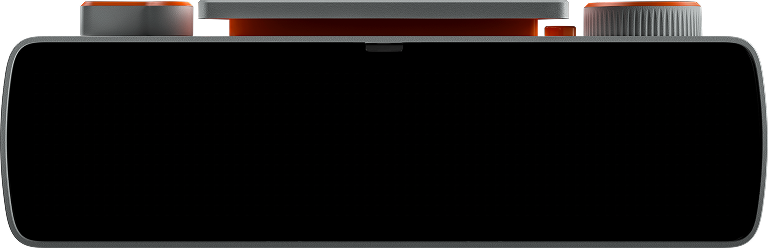
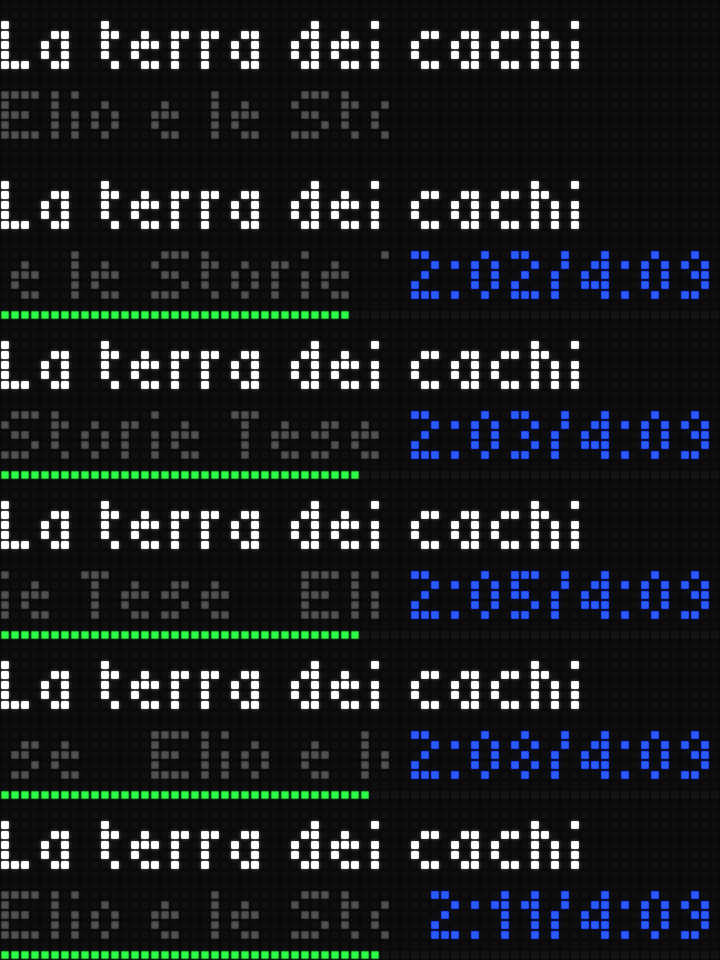
Displays system-wide Now Playing information and provides media controls for BUSY Bar.
How to run
This app depends on websockets. Grab the app folder
from GitHub, install once, then run:
pip install -r requirements.txt
python app.py
Over USB the bar is always at 10.0.4.20. On Wi-Fi, pass the bar's IP
with --host <address>.
No bar at hand? Run the
BUSY Bar Emulator
and point the app at it: python app.py --host 127.0.0.1:8080.
To keep it running without a terminal open, install it with busybar-manager, which handles the virtualenv, autostart and scheduling, and lets you switch between apps from a web dashboard.
Source code
app.py
#!/usr/bin/env python3
"""Cross-platform Now Playing prototype for BUSY Bar.
macOS: osascript/JXA + MediaRemote.framework (no Python dependencies)
Windows: PowerShell + Windows.Media.Control WinRT (experimental, no Python deps)
Examples:
python3 app.py
python3 app.py --host 127.0.0.1:8080
python3 app.py --print-only
python3 app.py --demo --host 127.0.0.1:8080
The display adapts to partial metadata. If elapsed time appears unreliable
(e.g. browsers/QuickTime reporting a fixed 0 while playing), the progress bar
is hidden rather than showing misleading progress.
"""
from __future__ import annotations
import argparse
import asyncio
import queue
import threading
import json
import math
import subprocess
import sys
import time
import urllib.error
import urllib.parse
import urllib.request
import unicodedata
from dataclasses import dataclass, asdict
from typing import Optional
APP = "media-player"
DEFAULT_HOST = "10.0.4.20"
POLL_INTERVAL = 1.0
PRIORITY = 30
WHITE = "#FFFFFFFF"
DIM = "#8A8A8AFF"
GREEN = "#38E56FFF"
AMBER = "#FFB020FF"
BAR_BG = "#252525FF"
BLACK = "#000000FF"
DEFAULT_TITLE_COLOR = WHITE
DEFAULT_ARTIST_COLOR = DIM
DEFAULT_TIME_COLOR = "#0080FFFF"
# ---------------------------------------------------------------------------
# Normalized model
# ---------------------------------------------------------------------------
@dataclass
class NowPlaying:
active: bool = False
state: str = "idle" # playing / paused / idle / unknown
app: Optional[str] = None
bundle_id: Optional[str] = None
title: Optional[str] = None
artist: Optional[str] = None
album: Optional[str] = None
duration: Optional[float] = None
elapsed: Optional[float] = None
playback_rate: Optional[float] = None
# True when the backend supplies a position that is recalculated by the OS
# on every poll (e.g. MediaRemote calculatedPlaybackPosition on macOS).
elapsed_live: bool = False
elapsed_reliable: bool = False
error: Optional[str] = None
# ---------------------------------------------------------------------------
# macOS backend
# ---------------------------------------------------------------------------
MAC_JXA = r'''
ObjC.import('Foundation');
function jsValue(v) {
if (v === undefined || v === null) return null;
try {
const x = ObjC.unwrap(v);
if (x === undefined || x === null) return null;
return x;
} catch (e) {
try { return String(v); } catch (_) { return null; }
}
}
function numberValue(v) {
const x = jsValue(v);
if (x === null) return null;
const n = Number(x);
return Number.isFinite(n) ? n : null;
}
function run() {
const bundle = $.NSBundle.bundleWithPath('/System/Library/PrivateFrameworks/MediaRemote.framework');
if (!bundle || !bundle.load) {
return JSON.stringify({ok:false, error:'Could not load MediaRemote.framework'});
}
const Request = $.NSClassFromString('MRNowPlayingRequest');
if (!Request) {
return JSON.stringify({ok:false, error:'MRNowPlayingRequest class not found'});
}
let playerPath = null;
let item = null;
let info = null;
try { playerPath = Request.localNowPlayingPlayerPath; } catch (_) {}
try { item = Request.localNowPlayingItem; } catch (_) {}
try { if (item) info = item.nowPlayingInfo; } catch (_) {}
let app = null;
let bundleId = null;
try {
if (playerPath && playerPath.client) {
app = jsValue(playerPath.client.displayName);
bundleId = jsValue(playerPath.client.bundleIdentifier);
}
} catch (_) {}
if (!info) {
return JSON.stringify({ok:true, active:false, app:app, bundle_id:bundleId,
title:null, artist:null, album:null, duration:null, elapsed:null,
playback_rate:null, elapsed_live:false, state:'idle'});
}
function get(key) {
try { return info.valueForKey(key); } catch (_) { return null; }
}
const rate = numberValue(get('kMRMediaRemoteNowPlayingInfoPlaybackRate'));
const title = jsValue(get('kMRMediaRemoteNowPlayingInfoTitle'));
const artist = jsValue(get('kMRMediaRemoteNowPlayingInfoArtist'));
const album = jsValue(get('kMRMediaRemoteNowPlayingInfoAlbum'));
const duration = numberValue(get('kMRMediaRemoteNowPlayingInfoDuration'));
// Prefer MediaRemote's calculated playback position. Unlike the raw
// NowPlayingInfo elapsed field, this keeps advancing while playback is
// already in progress and is available immediately when this app starts.
let calculatedElapsed = null;
try {
if (item && item.metadata) {
calculatedElapsed = numberValue(item.metadata.calculatedPlaybackPosition);
}
} catch (_) {}
const rawElapsed = numberValue(
get('kMRMediaRemoteNowPlayingInfoElapsedTime')
);
const useCalculatedElapsed =
rate !== null && rate > 0 && calculatedElapsed !== null;
const elapsed = useCalculatedElapsed
? calculatedElapsed
: rawElapsed;
let state = 'unknown';
if (rate !== null) state = rate > 0 ? 'playing' : 'paused';
return JSON.stringify({ok:true, active:!!(title || artist || album || app),
app:app, bundle_id:bundleId, title:title, artist:artist, album:album,
duration:duration, elapsed:elapsed, playback_rate:rate,
elapsed_live:useCalculatedElapsed, state:state});
}
'''
def read_macos() -> NowPlaying:
try:
p = subprocess.run(
["osascript", "-l", "JavaScript", "-e", MAC_JXA],
capture_output=True, text=True, timeout=5,
)
except Exception as exc:
return NowPlaying(error=f"macOS backend: {exc}")
if p.returncode != 0:
return NowPlaying(error=(p.stderr or p.stdout).strip() or "osascript failed")
try:
d = json.loads(p.stdout)
except Exception as exc:
return NowPlaying(error=f"invalid macOS backend JSON: {exc}")
if not d.get("ok", True):
return NowPlaying(error=d.get("error") or "macOS backend failed")
return _from_dict(d)
# ---------------------------------------------------------------------------
# OS-global media controls
# ---------------------------------------------------------------------------
MAC_CONTROL_JXA = r'''
ObjC.import('Foundation');
function run(argv) {
const command = Number(argv[0]);
const bundle = $.NSBundle.bundleWithPath('/System/Library/PrivateFrameworks/MediaRemote.framework/');
if (!bundle || !bundle.load) return 'Could not load MediaRemote.framework';
const Controller = $.NSClassFromString('MRNowPlayingController');
if (!Controller) return 'MRNowPlayingController class not found';
const controller = Controller.localRouteController;
if (!controller) return 'localRouteController unavailable';
const options = $.NSDictionary.alloc.init;
controller.sendCommandOptionsCompletion(command, options, null);
// MediaRemote dispatches commands asynchronously. Keep the JXA process
// alive briefly so the command reaches the active media client before
// osascript exits. Without this, the first command may work while later
// commands are silently dropped.
delay(0.35);
return 'ok';
}
'''
WINDOWS_CONTROL_PS = r'''
param([string]$Command)
$ErrorActionPreference = 'Stop'
function Wait-WinRT($op) {
while ($op.Status -eq 0) { Start-Sleep -Milliseconds 10 }
if ($op.Status -eq 1) { return $op.GetResults() }
throw "WinRT async operation failed with status $($op.Status)"
}
[void][Windows.Media.Control.GlobalSystemMediaTransportControlsSessionManager, Windows.Media.Control, ContentType=WindowsRuntime]
$mgr = Wait-WinRT ([Windows.Media.Control.GlobalSystemMediaTransportControlsSessionManager]::RequestAsync())
$session = $mgr.GetCurrentSession()
if ($null -eq $session) { throw 'No active media session' }
switch ($Command) {
'toggle' { [void](Wait-WinRT ($session.TryTogglePlayPauseAsync())) }
'next' { [void](Wait-WinRT ($session.TrySkipNextAsync())) }
'previous' { [void](Wait-WinRT ($session.TrySkipPreviousAsync())) }
default { throw "Unknown command: $Command" }
}
'''
def media_command(command: str):
if sys.platform == "darwin":
ids = {"toggle": 2, "next": 4, "previous": 5}
cmd_id = ids.get(command)
if cmd_id is None:
return False, f"unsupported command: {command}"
try:
p = subprocess.run(
["osascript", "-l", "JavaScript", "-e", MAC_CONTROL_JXA, str(cmd_id)],
capture_output=True, text=True, timeout=5,
)
except Exception as exc:
return False, str(exc)
detail = (p.stderr or p.stdout).strip()
return p.returncode == 0 and (not detail or detail == "ok"), detail or "ok"
if sys.platform == "win32":
try:
p = subprocess.run(
["powershell.exe", "-NoProfile", "-NonInteractive",
"-ExecutionPolicy", "Bypass", "-Command", WINDOWS_CONTROL_PS,
"-Command", command],
capture_output=True, text=True, timeout=8,
)
except Exception as exc:
return False, str(exc)
detail = (p.stderr or p.stdout).strip()
return p.returncode == 0, detail or "ok"
return False, f"media controls unsupported on {sys.platform}"
# ---------------------------------------------------------------------------
# Minimal BUSY Bar input WebSocket client
# ---------------------------------------------------------------------------
# Firmware /api/status/ws frames are protobuf. We only decode the fields needed
# here, avoiding busylib (and therefore zeroconf/pydantic/etc.). Wire layout:
# State.updates=2 -> StateUpdate.input=11 -> InputEvent.button_event=1 or
# InputEvent.encoder_event=3. Button START enum=2; action PRESS=0/RELEASE=1.
def _read_varint(buf: bytes, pos: int):
value = 0
shift = 0
while pos < len(buf):
b = buf[pos]
pos += 1
value |= (b & 0x7f) << shift
if not (b & 0x80):
return value, pos
shift += 7
if shift > 63:
raise ValueError("protobuf varint too long")
raise ValueError("truncated protobuf varint")
def _iter_proto_fields(buf: bytes):
pos = 0
while pos < len(buf):
key, pos = _read_varint(buf, pos)
field_no, wire = key >> 3, key & 7
if wire == 0:
value, pos = _read_varint(buf, pos)
yield field_no, wire, value
elif wire == 1:
if pos + 8 > len(buf):
return
yield field_no, wire, buf[pos:pos + 8]
pos += 8
elif wire == 2:
n, pos = _read_varint(buf, pos)
end = pos + n
if end > len(buf):
return
yield field_no, wire, buf[pos:end]
pos = end
elif wire == 5:
if pos + 4 > len(buf):
return
yield field_no, wire, buf[pos:pos + 4]
pos += 4
else:
raise ValueError(f"unsupported protobuf wire type {wire}")
def _zigzag32(v: int) -> int:
return (v >> 1) ^ -(v & 1)
def _decode_input_event(buf: bytes):
for field_no, wire, value in _iter_proto_fields(buf):
if wire != 2:
continue
if field_no == 1: # button_event
button = 0
action = 0
for f, w, v in _iter_proto_fields(value):
if w == 0 and f == 1:
button = int(v)
elif w == 0 and f == 2:
action = int(v)
return {"button_event": {"button": button, "action": action}}
if field_no == 3: # encoder_event
raw_delta = 0
for f, w, v in _iter_proto_fields(value):
if w == 0 and f == 1:
raw_delta = int(v)
return {"encoder_event": {"delta": _zigzag32(raw_delta)}}
return None
def _decode_state_inputs(frame: bytes):
events = []
for field_no, wire, update in _iter_proto_fields(frame):
if field_no != 2 or wire != 2: # State.updates
continue
for uf, uw, uv in _iter_proto_fields(update):
if uf == 11 and uw == 2: # StateUpdate.input
event = _decode_input_event(uv)
if event:
events.append(event)
return events
def _ws_url(host: str, token: Optional[str] = None) -> str:
raw = host.rstrip("/")
if "://" not in raw:
raw = "http://" + raw
parsed = urllib.parse.urlparse(raw)
scheme = "wss" if parsed.scheme == "https" else "ws"
path = parsed.path.rstrip("/") + "/api/status/ws"
query = parsed.query
if token:
token_q = urllib.parse.urlencode({"x-api-token": token})
query = token_q if not query else query + "&" + token_q
return urllib.parse.urlunparse((scheme, parsed.netloc, path, "", query, ""))
class InputListener:
def __init__(self, address: str, token: Optional[str] = None):
self._address = address
self._token = token
self._queue = queue.Queue()
self._stop = threading.Event()
self._thread = None
self.available = True
self.error = None
def start(self):
try:
import websockets # noqa: F401
except ImportError as exc:
self.available = False
self.error = f"websockets not installed: {exc}"
return
self._thread = threading.Thread(target=self._run, daemon=True)
self._thread.start()
def stop(self):
self._stop.set()
def poll(self):
events = []
try:
while True:
events.append(self._queue.get_nowait())
except queue.Empty:
return events
def _run(self):
try:
asyncio.run(self._listen_forever())
except Exception as exc:
self.available = False
self.error = str(exc)
print(f"controls: listener stopped: {exc}")
async def _listen_forever(self):
"""Keep the BUSY Bar input WebSocket alive across Wi-Fi dropouts.
A broken connection is treated as transient. Reconnect with exponential
backoff (1, 2, 4, 8, ... up to 15 seconds), reset the backoff after a
successful connection, and re-send the status-stream enable handshake
every time a new WebSocket session is established.
"""
import websockets
url = _ws_url(self._address, self._token)
# Fast reconnect policy for unstable Wi-Fi:
# 0.5s -> 1s -> 2s -> 3s (then stay at 3s).
backoff = 0.5
max_backoff = 3.0
connected_once = False
while not self._stop.is_set():
try:
async with websockets.connect(
url,
max_size=4 * 1024 * 1024,
ping_interval=20,
ping_timeout=20,
close_timeout=3,
open_timeout=8,
) as ws:
await ws.send(json.dumps({"enable": True}))
if connected_once:
print("controls: BUSY Bar input reconnected")
connected_once = True
self.available = True
self.error = None
backoff = 0.5
async for message in ws:
if self._stop.is_set():
return
if isinstance(message, str):
continue
try:
for event in _decode_state_inputs(bytes(message)):
self._queue.put(event)
except Exception as exc:
print(f"controls: ignored malformed status frame: {exc}")
except asyncio.CancelledError:
raise
except Exception as exc:
if self._stop.is_set():
return
self.available = False
self.error = str(exc)
print(
f"controls: BUSY Bar input disconnected: {exc}; "
f"reconnecting in {backoff:g}s"
)
# Event.wait-style sleep would block the asyncio loop; poll the
# stop flag in short chunks so Ctrl-C/shutdown stays responsive.
deadline = time.monotonic() + backoff
while not self._stop.is_set() and time.monotonic() < deadline:
await asyncio.sleep(min(0.25, deadline - time.monotonic()))
backoff = min(max_backoff, backoff * 2.0)
def process_control_events(listener: InputListener, last_wheel_at: float, cooldown: float, invert_dial: bool = False):
for event in listener.poll():
now = time.monotonic()
if "button_event" in event:
be = event["button_event"]
# START=2, PRESS=0. Ignore RELEASE so one physical click = one toggle.
if be.get("button") == 2 and be.get("action") == 0:
ok, detail = media_command("toggle")
print("control: PLAY/PAUSE" + ("" if ok else f" failed: {detail}"))
elif "encoder_event" in event:
delta = int(event["encoder_event"].get("delta", 0) or 0)
if delta and now - last_wheel_at >= cooldown:
# Default mapping follows the physical direction seen from the
# front of the BUSY Bar. --invert-dial swaps Next/Previous.
forward = delta < 0
if invert_dial:
forward = not forward
command = "next" if forward else "previous"
ok, detail = media_command(command)
label = "NEXT" if forward else "PREVIOUS"
print(f"control: {label}" + ("" if ok else f" failed: {detail}"))
last_wheel_at = now
return last_wheel_at
# ---------------------------------------------------------------------------
# Windows backend (experimental)
# ---------------------------------------------------------------------------
WINDOWS_PS = r'''
$ErrorActionPreference = 'Stop'
function Wait-WinRT($op) {
while ($op.Status -eq 0) { Start-Sleep -Milliseconds 10 }
if ($op.Status -eq 1) { return $op.GetResults() }
throw "WinRT async operation failed with status $($op.Status)"
}
[void][Windows.Media.Control.GlobalSystemMediaTransportControlsSessionManager, Windows.Media.Control, ContentType=WindowsRuntime]
$mgr = Wait-WinRT ([Windows.Media.Control.GlobalSystemMediaTransportControlsSessionManager]::RequestAsync())
$session = $mgr.GetCurrentSession()
if ($null -eq $session) {
@{ ok=$true; active=$false; state='idle' } | ConvertTo-Json -Compress
exit 0
}
$props = Wait-WinRT ($session.TryGetMediaPropertiesAsync())
$playback = $session.GetPlaybackInfo()
$timeline = $session.GetTimelineProperties()
$state = switch ([int]$playback.PlaybackStatus) {
4 { 'playing' }
5 { 'paused' }
3 { 'paused' }
default { 'unknown' }
}
$duration = $null
$elapsed = $null
if ($null -ne $timeline) {
try { $duration = $timeline.EndTime.TotalSeconds } catch {}
try { $elapsed = $timeline.Position.TotalSeconds } catch {}
}
@{
ok = $true
active = $true
state = $state
app = $session.SourceAppUserModelId
bundle_id = $session.SourceAppUserModelId
title = if ($props.Title) { [string]$props.Title } else { $null }
artist = if ($props.Artist) { [string]$props.Artist } else { $null }
album = if ($props.AlbumTitle) { [string]$props.AlbumTitle } else { $null }
duration = $duration
elapsed = $elapsed
elapsed_live = ($null -ne $elapsed)
playback_rate = $null
} | ConvertTo-Json -Compress
'''
def read_windows() -> NowPlaying:
shell = "powershell.exe"
try:
p = subprocess.run(
[shell, "-NoProfile", "-NonInteractive", "-ExecutionPolicy", "Bypass", "-Command", WINDOWS_PS],
capture_output=True, text=True, timeout=8,
)
except Exception as exc:
return NowPlaying(error=f"Windows backend: {exc}")
if p.returncode != 0:
return NowPlaying(error=(p.stderr or p.stdout).strip() or "PowerShell backend failed")
try:
d = json.loads(p.stdout.strip())
except Exception as exc:
return NowPlaying(error=f"invalid Windows backend JSON: {exc}; output={p.stdout!r}")
return _from_dict(d)
def _from_dict(d: dict) -> NowPlaying:
def num(v):
try:
return float(v) if v is not None else None
except (TypeError, ValueError):
return None
return NowPlaying(
active=bool(d.get("active")),
state=str(d.get("state") or "unknown"),
app=_clean(d.get("app")),
bundle_id=_clean(d.get("bundle_id")),
title=_clean(d.get("title")),
artist=_clean(d.get("artist")),
album=_clean(d.get("album")),
duration=num(d.get("duration")),
elapsed=num(d.get("elapsed")),
playback_rate=num(d.get("playback_rate")),
)
def _clean(v):
if v is None:
return None
s = str(v).strip()
return s or None
# ---------------------------------------------------------------------------
# Reliability tracking
# ---------------------------------------------------------------------------
class ElapsedTracker:
"""Normalize elapsed time and keep it moving between OS updates.
Some players publish elapsed only on seek/pause/state changes rather than on
every query. When we have a trustworthy non-zero position, keep a local
monotonic anchor and extrapolate while playing. A fresh zero is considered
tentative until the source itself advances, which avoids inventing progress
for QuickTime/browser sessions that expose a permanently-zero position.
"""
ZERO_GRACE_S = 3.0
def __init__(self):
self.identity = None
self.raw_elapsed = None
self.anchor_elapsed = None
self.anchor_wall = None
self.first_valid_wall = None
self.source_advanced = False
self.reliable_bundles = set()
self.last_observed_elapsed = None
self.last_observed_wall = None
def _reset(self, ident, now):
self.identity = ident
self.raw_elapsed = None
self.anchor_elapsed = None
self.anchor_wall = None
self.first_valid_wall = now
self.source_advanced = False
self.last_observed_elapsed = None
self.last_observed_wall = None
def update(self, np: NowPlaying) -> NowPlaying:
ident = (np.bundle_id, np.title, np.duration)
now = time.monotonic()
if ident != self.identity:
self._reset(ident, now)
e = np.elapsed
d = np.duration
# Some macOS clients report playback_rate=None when paused, which the
# backend normalizes to state="unknown". If the OS-reported elapsed
# value is present and stationary across polls, treat unknown as paused.
if (
np.state == "unknown"
and e is not None
and self.last_observed_elapsed is not None
and self.last_observed_wall is not None
and now - self.last_observed_wall >= 0.5
and abs(e - self.last_observed_elapsed) <= 0.10
):
np.state = "paused"
if e is not None:
self.last_observed_elapsed = e
self.last_observed_wall = now
valid = e is not None and d is not None and d > 0 and 0 <= e <= d + 5
if not valid:
# Some players temporarily stop publishing elapsed at pause/end of
# track while duration/metadata remain available. Preserve the last
# trustworthy timeline instead of collapsing "2:30/2:31" to "2:31"
# and hiding the progress bar.
if (
d is not None and d > 0
and self.source_advanced
and self.anchor_elapsed is not None
and np.active
):
held = self.anchor_elapsed
if np.state == "playing" and self.anchor_wall is not None and not np.elapsed_live:
rate = np.playback_rate if np.playback_rate and np.playback_rate > 0 else 1.0
held += (now - self.anchor_wall) * rate
else:
# paused/unknown freezes the last trustworthy position.
self.anchor_elapsed = held
self.anchor_wall = now
np.elapsed = max(0.0, min(d, held))
np.elapsed_reliable = True
return np
np.elapsed_reliable = False
return np
# A non-zero position is immediately useful. If a bundle has already
# demonstrated a working timeline on an earlier track, trust a fresh
# 0:00 on the next track and start the local monotonic clock immediately.
# This fixes players such as VLC, which can publish new metadata at 0:00
# and then stop updating elapsed until pause/resume. Browsers/QuickTime
# that have never demonstrated a real timeline still use the zero grace.
bundle_known_reliable = bool(np.bundle_id and np.bundle_id in self.reliable_bundles)
if e > 0.5 or (bundle_known_reliable and np.state == "playing"):
self.source_advanced = True
if self.raw_elapsed is not None and e > self.raw_elapsed + 0.25:
self.source_advanced = True
raw_changed = (
self.raw_elapsed is None
or abs(e - self.raw_elapsed) > 0.25
)
if self.anchor_elapsed is None or raw_changed:
self.anchor_elapsed = e
self.anchor_wall = now
self.raw_elapsed = e
# For a source stuck at zero, wait briefly for real evidence of movement.
# This keeps QuickTime/Chromium-style zero placeholders from becoming a
# fabricated timeline. Non-zero sources (e.g. VLC) are reliable from
# the very first poll, so the bar appears immediately.
if not self.source_advanced:
if e <= 0.5 and now - self.first_valid_wall >= self.ZERO_GRACE_S:
np.elapsed_reliable = False
return np
np.elapsed_reliable = False
return np
# A live OS-calculated position is authoritative. Do not extrapolate it:
# when playback is paused the value stops, even if a player leaves a
# stale playback-rate flag set to 1. This fixes the counter continuing
# to run after a BUSY Bar Play/Pause command.
if np.elapsed_live:
predicted = e
self.anchor_elapsed = e
self.anchor_wall = now
else:
predicted = self.anchor_elapsed
if np.state == "playing" and self.anchor_wall is not None:
rate = np.playback_rate if np.playback_rate and np.playback_rate > 0 else 1.0
predicted += (now - self.anchor_wall) * rate
else:
# Never extrapolate through paused or unknown states. This also
# avoids a catch-up jump when playback resumes later.
self.anchor_elapsed = predicted
self.anchor_wall = now
np.elapsed = max(0.0, min(d, predicted))
np.elapsed_reliable = True
if np.bundle_id:
self.reliable_bundles.add(np.bundle_id)
return np
# ---------------------------------------------------------------------------
# BUSY Bar API
# ---------------------------------------------------------------------------
def _base(host: str) -> str:
host = host.replace("http://", "").replace("https://", "").rstrip("/")
return "http://" + host
def _request(host, method, path, body=None, content_type="application/json"):
req = urllib.request.Request(
_base(host) + path,
data=body,
method=method,
headers={"Content-Type": content_type} if body is not None else {},
)
try:
with urllib.request.urlopen(req, timeout=5) as r:
return r.getcode(), r.read()
except urllib.error.HTTPError as e:
return e.code, e.read()
def draw(host, elements):
body = json.dumps({
"application_name": APP,
"priority": PRIORITY,
"elements": elements,
}).encode("utf-8")
return _request(host, "POST", "/api/display/draw", body)
def clear(host):
qs = urllib.parse.urlencode({"application_name": APP})
return _request(host, "DELETE", "/api/display/draw?" + qs)[0]
def text(el_id, txt, x, y, *, font="small", color=WHITE, align=None,
width=None, scroll_rate=None):
el = {
"id": el_id, "type": "text", "text": str(txt), "x": x, "y": y,
"font": font, "color": color,
}
if align is not None:
el["align"] = align
if width is not None:
el["width"] = width
if scroll_rate is not None:
el["scroll_rate"] = scroll_rate
el["scroll_start_delay"] = 900
el["scroll_repeat_delay"] = 1800
return el
def rect(el_id, x, y, w, h, color):
return {
"id": el_id, "type": "rectangle", "x": x, "y": y,
"width": w, "height": h, "border_width": 0,
"fill": "solid", "fill_colors": [color],
}
# ---------------------------------------------------------------------------
# Layout
# ---------------------------------------------------------------------------
def sanitize_display_text(value: Optional[str]) -> Optional[str]:
"""Convert metadata to the ASCII subset accepted by the BUSY Bar renderer."""
if value is None:
return None
value = str(value)
replacements = {
"\u2018": "'", "\u2019": "'", "\u201a": "'",
"\u201c": '"', "\u201d": '"',
"\u2013": "-", "\u2014": "-", "\u2212": "-",
"\u2026": "...", "\u00a0": " ",
}
for source, target in replacements.items():
value = value.replace(source, target)
# Preserve useful Latin approximations (e.g. é -> e), then discard
# characters unsupported by the device font (Japanese, emoji, etc.).
value = unicodedata.normalize("NFKD", value)
value = value.encode("ascii", "ignore").decode("ascii")
value = "".join(ch if 32 <= ord(ch) <= 126 else " " for ch in value)
value = " ".join(value.split())
return value or None
def sanitize_now_playing(np: NowPlaying) -> NowPlaying:
np.app = sanitize_display_text(np.app)
np.title = sanitize_display_text(np.title)
np.artist = sanitize_display_text(np.artist)
np.album = sanitize_display_text(np.album)
return np
def fmt_time(v: Optional[float]) -> str:
if v is None:
return "--:--"
total = max(0, int(v))
m, s = divmod(total, 60)
h, m = divmod(m, 60)
return f"{h}:{m:02d}:{s:02d}" if h else f"{m}:{s:02d}"
def _status_glyph(state):
return "PLAY" if state == "playing" else "PAUSE" if state == "paused" else ""
def _source_label(np: NowPlaying) -> str:
if np.app:
# Windows SourceAppUserModelId can be very long; keep a readable tail.
if len(np.app) > 28 and ("!" in np.app or "." in np.app):
return np.app.split("!")[-1].split(".")[-1]
return np.app
return "Now Playing"
def _time_counter(np: NowPlaying, separator: str = "/") -> Optional[str]:
if not np.duration:
return None
if np.elapsed_reliable and np.elapsed is not None:
return f"{fmt_time(np.elapsed)}{separator}{fmt_time(np.duration)}"
return fmt_time(np.duration)
def _layout_parts(np: NowPlaying, title_color=DEFAULT_TITLE_COLOR, artist_color=DEFAULT_ARTIST_COLOR, time_separator="/"):
"""Return the stable text/layout state for the current Now Playing item.
This deliberately excludes the elapsed *value*: line1/line2 must not be
redrawn every second, otherwise the BUSY Bar restarts their hardware text
scrolling animation. The counter width is included because a transition
such as 9:59 -> 10:00 can legitimately change the space available to line2.
"""
if np.error:
return {
"mode": "error", "line1": "NOW PLAYING ERROR", "line2": np.error,
"line1_color": AMBER, "line2_color": DIM, "left_width": 72,
"counter_width": 0,
}
if not np.active:
return {
"mode": "idle", "line1": "NOW PLAYING", "line2": "Waiting for media",
"line1_color": DIM, "line2_color": DIM, "left_width": 72,
"counter_width": 0,
}
title = np.title
artist = np.artist
source = _source_label(np)
glyph = _status_glyph(np.state)
counter = _time_counter(np, time_separator)
line1 = title or f"{glyph} {source}"
if title and artist:
line2 = artist
elif title:
line2 = f"{glyph} {source}"
else:
line2 = "Playing" if np.state == "playing" else "Paused"
# The BUSY Bar small font advances by about 3 px per character.
# Reserve the counter width plus an explicit 6 px visual gap so the
# artist/source text never overlaps the right-aligned time counter.
counter_width = (len(counter) * 3) if counter else 0
left_width = max(12, 72 - counter_width - (6 if counter else 0))
return {
"mode": "active", "line1": line1, "line2": line2,
"line1_color": title_color,
"line2_color": artist_color,
"left_width": left_width, "counter_width": counter_width,
}
def build_static_elements(np: NowPlaying, title_color=DEFAULT_TITLE_COLOR, artist_color=DEFAULT_ARTIST_COLOR, time_separator="/"):
"""Elements that should only be resent when text/layout actually changes."""
lp = _layout_parts(np, title_color, artist_color, time_separator)
if lp["mode"] == "error":
return [
text("line1", lp["line1"], 0, 0, color=lp["line1_color"]),
text("line2", lp["line2"], 0, 7, color=lp["line2_color"],
width=72, scroll_rate=540),
]
if lp["mode"] == "idle":
return [
text("line1", lp["line1"], 36, 0, align="top_mid", color=lp["line1_color"]),
text("line2", lp["line2"], 36, 7, align="top_mid", color=lp["line2_color"]),
]
return [
text("line1", lp["line1"], 0, 0, width=72, scroll_rate=480,
color=lp["line1_color"]),
text("line2", lp["line2"], 0, 7, width=lp["left_width"], scroll_rate=480,
color=lp["line2_color"]),
]
def build_dynamic_elements(np: NowPlaying, time_color=DEFAULT_TIME_COLOR, time_separator="/"):
"""Counter + timeline, safe to update every second without touching scroll text."""
if np.error or not np.active:
return [
text("time", "", 72, 7, align="top_right", color=BLACK),
rect("prog_bg", 0, 15, 72, 1, BLACK),
rect("prog", 0, 15, 1, 1, BLACK),
]
counter = _time_counter(np, time_separator)
elements = [
text("time", counter or "", 72, 7, align="top_right",
color=time_color if counter else BLACK),
]
if np.elapsed_reliable and np.duration and np.elapsed is not None:
frac = max(0.0, min(1.0, np.elapsed / np.duration))
w = max(1, min(72, int(round(frac * 72))))
elements += [
rect("prog_bg", 0, 15, 72, 1, BAR_BG),
rect("prog", 0, 15, w, 1, GREEN if np.state == "playing" else AMBER),
]
else:
elements += [
rect("prog_bg", 0, 15, 72, 1, BLACK),
rect("prog", 0, 15, 1, 1, BLACK),
]
return elements
def static_render_key(np: NowPlaying, time_separator="/"):
"""Anything here changing is allowed to restart text scrolling."""
lp = _layout_parts(np, time_separator=time_separator)
return (
lp["mode"], lp["line1"], lp["line2"], lp["line1_color"],
lp["line2_color"], lp["left_width"], lp["counter_width"],
)
def dynamic_render_key(np: NowPlaying):
return (
np.active, np.state,
_time_counter(np),
round(np.duration or 0),
round(np.elapsed or 0) if np.elapsed_reliable else None,
np.elapsed_reliable, bool(np.error),
)
# ---------------------------------------------------------------------------
# Demo / console
# ---------------------------------------------------------------------------
def demo_frame(t: float) -> NowPlaying:
duration = 313.0
elapsed = t % duration
return NowPlaying(
active=True, state="playing", app="VLC", bundle_id="org.videolan.vlc",
title="AnatomiaMaster — cross-platform Now Playing prototype",
artist="BUSY Bar Demo", duration=duration, elapsed=elapsed,
playback_rate=1.0, elapsed_live=True, elapsed_reliable=True,
)
def print_info(np: NowPlaying):
if np.error:
print("Error:", np.error)
return
print(f"State: {np.state}")
print(f"App: {np.app or '--'}")
print(f"Title: {np.title or '--'}")
print(f"Artist: {np.artist or '--'}")
print(f"Album: {np.album or '--'}")
print(f"Duration: {fmt_time(np.duration)}")
print(f"Elapsed: {fmt_time(np.elapsed)}")
print(f"Reliable: {'yes' if np.elapsed_reliable else 'no'}")
def choose_backend():
if sys.platform == "darwin":
return read_macos, "macOS/MediaRemote"
if sys.platform == "win32":
return read_windows, "Windows/SMTC"
return lambda: NowPlaying(error=f"unsupported platform: {sys.platform}"), "unsupported"
def main() -> int:
p = argparse.ArgumentParser(description="Cross-platform Now Playing for BUSY Bar")
p.add_argument("--host", default=DEFAULT_HOST, help="BUSY Bar host (default: 10.0.4.20)")
p.add_argument("--interval", type=float, default=POLL_INTERVAL, help="poll interval seconds (default: 1)")
p.add_argument("--print-only", action="store_true", help="print normalized metadata; do not contact BUSY Bar")
p.add_argument("--json", action="store_true", help="with --print-only, emit normalized JSON")
p.add_argument("--demo", action="store_true", help="use synthetic metadata instead of OS Now Playing")
p.add_argument("--once", action="store_true", help="poll/draw once and exit")
p.add_argument("--token", default=None, help="BUSY Bar Wi-Fi access token/PIN, if required")
p.add_argument("--no-controls", action="store_true", help="disable START/wheel media controls")
p.add_argument("--title-color", default=DEFAULT_TITLE_COLOR, help="title color as #RRGGBB or #RRGGBBAA (default: white)")
p.add_argument("--artist-color", default=DEFAULT_ARTIST_COLOR, help="artist/source color as #RRGGBB or #RRGGBBAA (default: gray)")
p.add_argument("--time-color", default=DEFAULT_TIME_COLOR, help="time counter color as #RRGGBB or #RRGGBBAA (default: blue)")
p.add_argument("--time-separator", default="/", help="separator between elapsed and total time (default: /)")
p.add_argument("--wheel-cooldown", type=float, default=0.40, help="seconds between wheel track changes (default: 0.40)")
p.add_argument("--invert-dial", action="store_true", help="invert rotary encoder direction for Previous/Next")
args = p.parse_args()
def normalize_color(value: str, option: str) -> str:
value = value.strip()
if not value.startswith("#"):
value = "#" + value
if len(value) == 7:
value += "FF"
if len(value) != 9 or any(c not in "0123456789abcdefABCDEF" for c in value[1:]):
p.error(f"{option} must be #RRGGBB or #RRGGBBAA")
return value.upper()
args.title_color = normalize_color(args.title_color, "--title-color")
args.artist_color = normalize_color(args.artist_color, "--artist-color")
args.time_color = normalize_color(args.time_color, "--time-color")
if not args.time_separator or len(args.time_separator) > 3 or any(c in "\r\n\t" for c in args.time_separator):
p.error("--time-separator must be 1 to 3 printable characters")
backend, backend_name = choose_backend()
tracker = ElapsedTracker()
print(f"{APP}: backend={backend_name}" + (" [DEMO]" if args.demo else ""))
if not args.print_only:
print(f"BUSY Bar -> {_base(args.host)} (Ctrl-C to stop)")
last_static_key = None
last_dynamic_key = None
demo_start = time.monotonic()
controls = None
last_wheel_at = 0.0
if not args.print_only and not args.no_controls and not args.once:
controls = InputListener(args.host, args.token)
controls.start()
if controls.available:
print("controls: START=play/pause wheel=previous/next (direct WebSocket)" + (" [inverted]" if args.invert_dial else ""))
else:
print(f"controls: unavailable ({controls.error or 'unknown error'})")
try:
while True:
if controls is not None:
last_wheel_at = process_control_events(
controls, last_wheel_at, max(0.0, args.wheel_cooldown), args.invert_dial
)
if args.demo:
np = demo_frame(time.monotonic() - demo_start)
else:
np = tracker.update(backend())
# Sanitize only at the display boundary: backend metadata remains
# Unicode-capable, while unsupported glyphs cannot break /api/draw.
np = sanitize_now_playing(np)
if args.print_only:
if args.json:
print(json.dumps(asdict(np), ensure_ascii=False, indent=2))
else:
print_info(np)
if args.once or not args.demo:
return 0 if not np.error else 1
else:
# Keep scrolling text and the once-per-second timeline in separate
# draw requests. Re-sending a scrolling text element resets the BUSY
# Bar's hardware scroll animation, even when its text is unchanged.
skey = static_render_key(np, args.time_separator)
dkey = dynamic_render_key(np)
if skey != last_static_key:
status, response_body = draw(args.host, build_static_elements(np, args.title_color, args.artist_color, args.time_separator))
if status == 409:
print("display busy (409); will retry")
elif status not in (200, 201, 204):
detail = response_body.decode("utf-8", "ignore").strip()
print(f"static draw returned HTTP {status}: {detail or '<empty response>'}")
else:
last_static_key = skey
if dkey != last_dynamic_key:
status, response_body = draw(args.host, build_dynamic_elements(np, args.time_color, args.time_separator))
if status == 409:
print("display busy (409); will retry")
elif status not in (200, 201, 204):
detail = response_body.decode("utf-8", "ignore").strip()
print(f"dynamic draw returned HTTP {status}: {detail or '<empty response>'}")
else:
last_dynamic_key = dkey
if args.once:
return 0
time.sleep(max(0.25, args.interval))
except KeyboardInterrupt:
print("\nstopped.")
return 0
finally:
if controls is not None:
controls.stop()
if not args.print_only:
try:
clear(args.host)
except Exception:
pass
if __name__ == "__main__":
raise SystemExit(main())